Understanding Lenses: Focal Length, Aperture, and What Actually Matters
A 50mm prime is not a magic lens. A 70-200mm is not always the right zoom. Here is what the numbers on a lens barrel really mean.
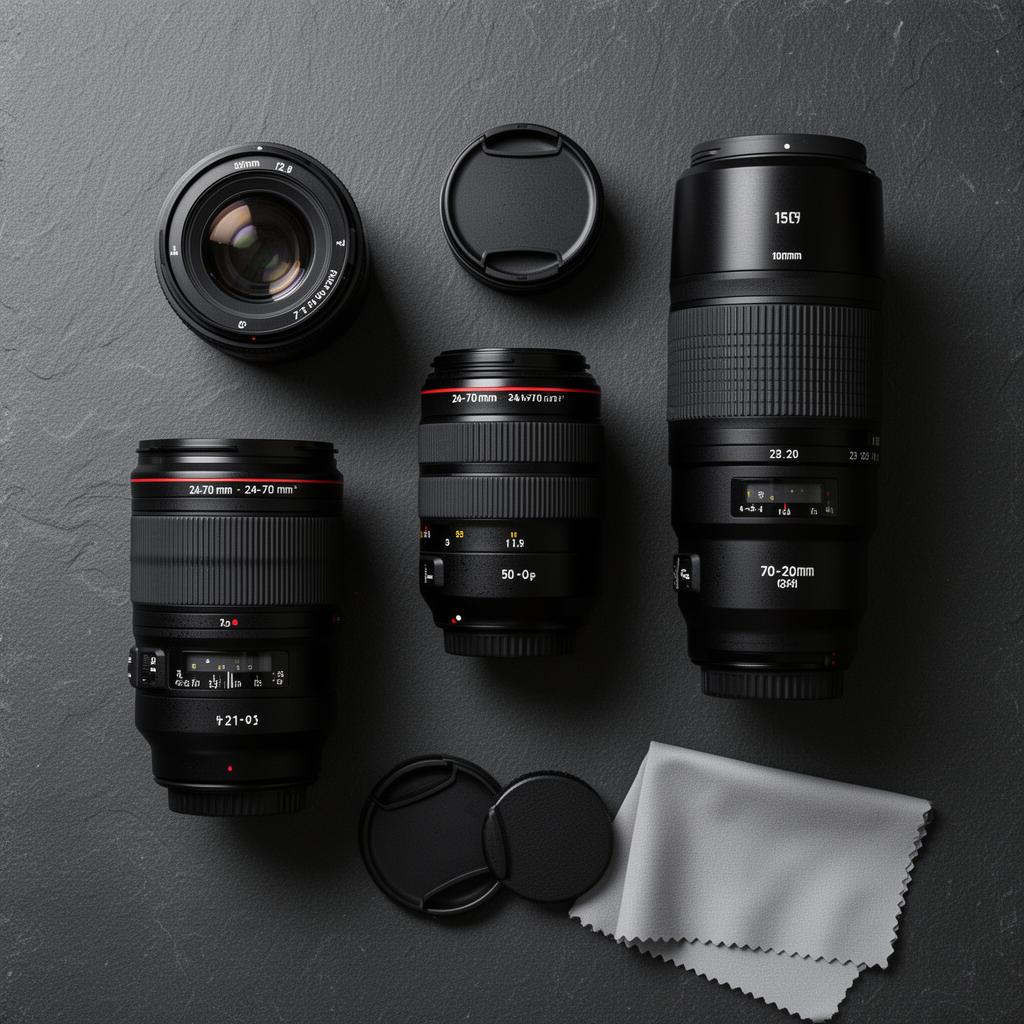
Focal length
Focal length is the distance, in millimetres, between the optical centre of the lens and the sensor when focused at infinity. It controls angle of view and apparent compression — not perspective. Perspective is determined by where you stand.
| Focal length (full-frame) | Angle of view | Typical use |
|---|---|---|
| 14–24mm | 114°–84° | Architecture, interiors, environmental |
| 35mm | 63° | Reportage, documentary, weddings |
| 50mm | 47° | Closest to human central vision |
| 85mm | 29° | Portraits, flattering compression |
| 135mm | 18° | Headshots, ceremony from the aisle |
| 200–400mm | 12°–6° | Sport, wildlife, candid distance |
Crop factor
An APS-C sensor (Canon 1.6x, Nikon/Sony 1.5x) crops into the image circle. A 50mm lens on APS-C frames like a 75–80mm on full-frame. The lens itself does not change focal length — it just sees a smaller part of the projected image.
Aperture range
A 'fast' lens has a wide maximum aperture (f/1.4, f/1.8, f/2.8). Zooms with a constant aperture (24-70 f/2.8, 70-200 f/2.8) cost more because the maximum aperture is maintained across the zoom range — variable-aperture zooms (18-55 f/3.5-5.6) lose light as you zoom in.
Prime vs zoom
- 01Primes: usually sharper wide open, smaller, lighter, faster apertures, force you to move
- 02Zooms: flexibility, fewer lens changes, essential for weddings and events
- 03Modern pro zooms (24-70 f/2.8 GM, RF, Z) match older prime sharpness in most uses
Sources & further reading
Fact-checked against the sources above. Spot an error? Email studio@capturetime.co.